
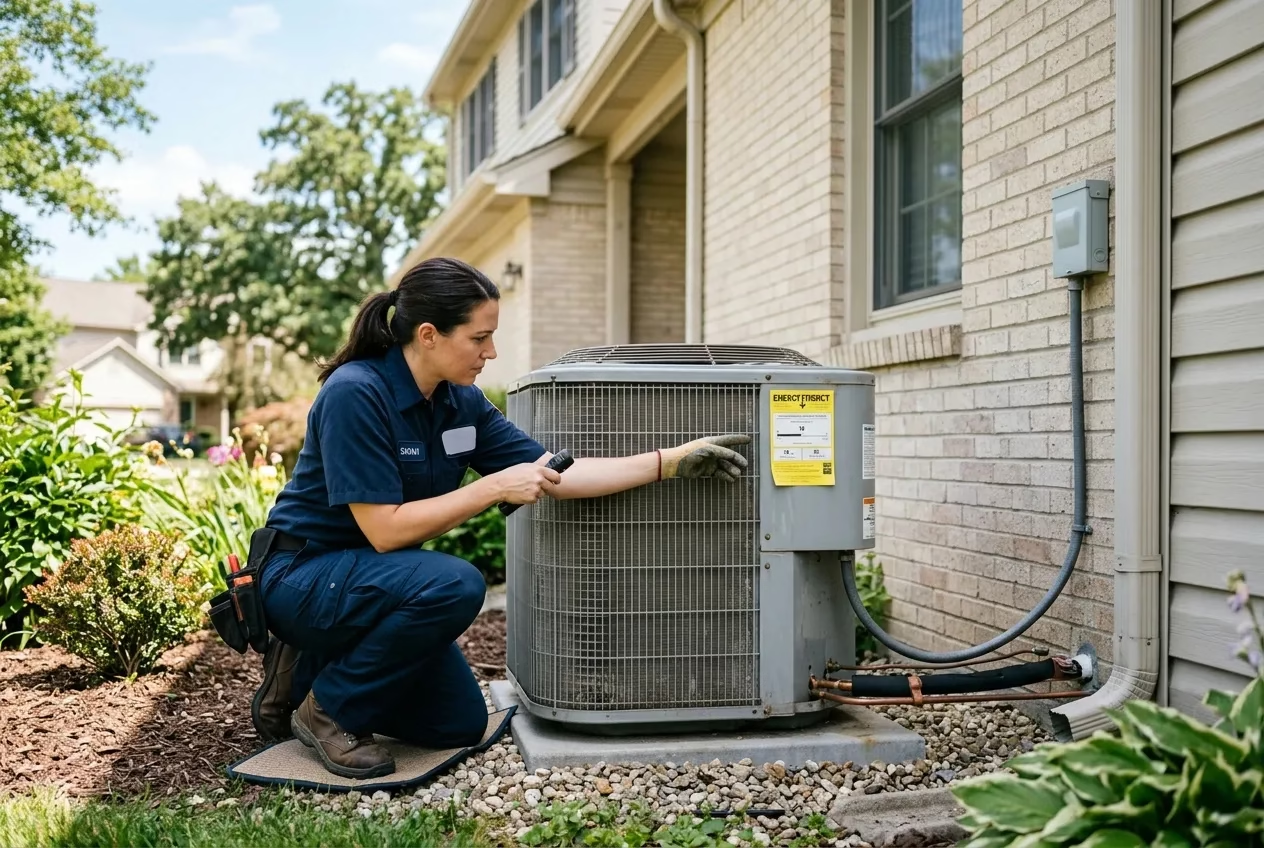
New federal HVAC efficiency rules are taking effect this year, and homeowners may notice the impact when replacing an air conditioner, heat pump, or furnace. The changes are aimed at improving energy efficiency and reducing energy use over time, but they can also affect equipment availability, upfront costs, and installation choices.
For most homeowners, the biggest practical takeaway is simple: if your system fails, your replacement options may not look the same as they did a few years ago. Depending on where you live and what type of equipment you need, contractors may recommend newer models that meet higher minimum efficiency standards or different matched components than you expected.
What the new federal HVAC rules do
Federal efficiency standards for residential HVAC equipment are set by the U.S. Department of Energy. In recent years, updated rules have raised minimum efficiency requirements for certain types of equipment, including central air conditioners and heat pumps, with regional differences for some cooling products.
In plain terms, the rules limit the sale and installation of lower-efficiency equipment that used to be common in some markets. Manufacturers and distributors have had to adjust product lines, and contractors have had to pay closer attention to whether a unit is compliant for the home and region where it will be installed.
Homeowners are unlikely to need the technical details before calling for service, but they may hear terms such as SEER2, EER2, and HSPF2. These are updated testing and efficiency metrics used to rate modern HVAC systems under newer federal standards.
Which systems are most affected
The rules are most noticeable for homeowners shopping for:
- Central air conditioners
- Air-source heat pumps
- Certain gas furnaces and packaged systems
Regional standards matter most for central air conditioners. In some parts of the country, especially hotter Southern states, higher minimum efficiency levels can affect which models are legally installed as replacements. Heat pumps are also subject to updated minimum ratings, though the standards are generally national rather than region-specific for many products.
That does not mean every existing HVAC system must be replaced immediately. If your current equipment still works, you are typically not required to remove it just because standards changed. The rules mainly matter when buying and installing new equipment.
What this means for homeowners replacing a system
If your HVAC system fails this year, the new standards may affect both price and product selection. Higher-efficiency equipment often costs more upfront than older, lower-efficiency models, although it may reduce utility bills over time.
For a full system replacement, homeowners may also find that a contractor recommends replacing more than one component at once. That is because air conditioners and heat pumps are often rated and approved as matched systems, meaning the outdoor unit, indoor coil, and sometimes air handler or furnace need to work together to meet efficiency and performance requirements.
As a result, a “simple condenser swap” may be less practical in some cases than it once was. If the existing indoor components are too old or incompatible, replacing only one piece of the system may not be the best or compliant option.
Will the new rules raise HVAC costs?
Many homeowners should expect some upward pressure on replacement costs, though pricing still varies widely by region, system size, installation complexity, and brand tier. The federal rules themselves do not set retail prices, but higher minimum efficiency standards can push the market toward more advanced equipment, and that can raise equipment and labor costs.
In addition, installers may need to spend more time verifying compliant matched systems, sizing equipment correctly, and handling inventory changes. If your replacement also requires ductwork updates, electrical work, refrigerant line changes, or pad modifications, total project costs can climb further.
The silver lining is that higher-efficiency systems may offer lower monthly operating costs, especially in homes with heavy cooling demand. Homeowners may also be eligible for rebates, tax credits, or utility incentives depending on the equipment selected and local programs available.
Steps to take before you replace your HVAC system
If you think your air conditioner, heat pump, or furnace may be nearing the end of its life, planning ahead can help you avoid a rushed decision during extreme weather.
- Ask whether the proposed system meets current federal standards for your region and home type.
- Request the full model numbers for indoor and outdoor components, not just a brand name.
- Get at least two written estimates when possible.
- Ask about warranty terms, efficiency ratings, and expected utility savings.
- Check whether tax credits, manufacturer promotions, or local utility rebates apply.
It is also smart to ask whether your home needs a load calculation instead of a same-size replacement. Newer equipment can perform better when sized properly, and oversizing can reduce comfort and efficiency.
What homeowners should watch for
When regulations change, confusion can follow. Be cautious if a salesperson claims you must replace a working system immediately because of the new rules. In most cases, homeowners can continue using existing equipment until repair or replacement makes sense.
You should also be wary of vague claims that one efficiency number alone tells the whole story. Installation quality, duct condition, airflow, insulation, and thermostat setup all affect real-world performance. A compliant high-efficiency unit installed poorly may not deliver the savings a homeowner expects.
For homeowners, the best approach is to focus on compliant equipment, proper sizing, clear written proposals, and total long-term value instead of just the lowest sticker price.
The bottom line
The new federal HVAC efficiency rules now in effect are changing the replacement market more than they are changing day-to-day life for homeowners with functioning systems. But if you need a new air conditioner, heat pump, or furnace this year, expect updated efficiency labels, fewer low-end replacement options, and more emphasis on matched systems and compliant installations.
Planning ahead, comparing quotes, and asking better questions can help you navigate the new rules without overpaying or ending up with the wrong equipment for your home.